Paul H. Young’s personal “best rod in the world”
Paul H. Young developed the “Parabolic 15” fly rod in the late 1940s. In the 1949 catalog the unnamed model was described as measuring eight feet long in two-piece configuration with a finished weight of 3-3/4 to 4 ounces. By 1950 Young was already calling it “the famous Parabolic 15.” The taper became the basis by which Young developed his other parabolic rod models in length and line weights smaller and larger than the Parabolic 15.
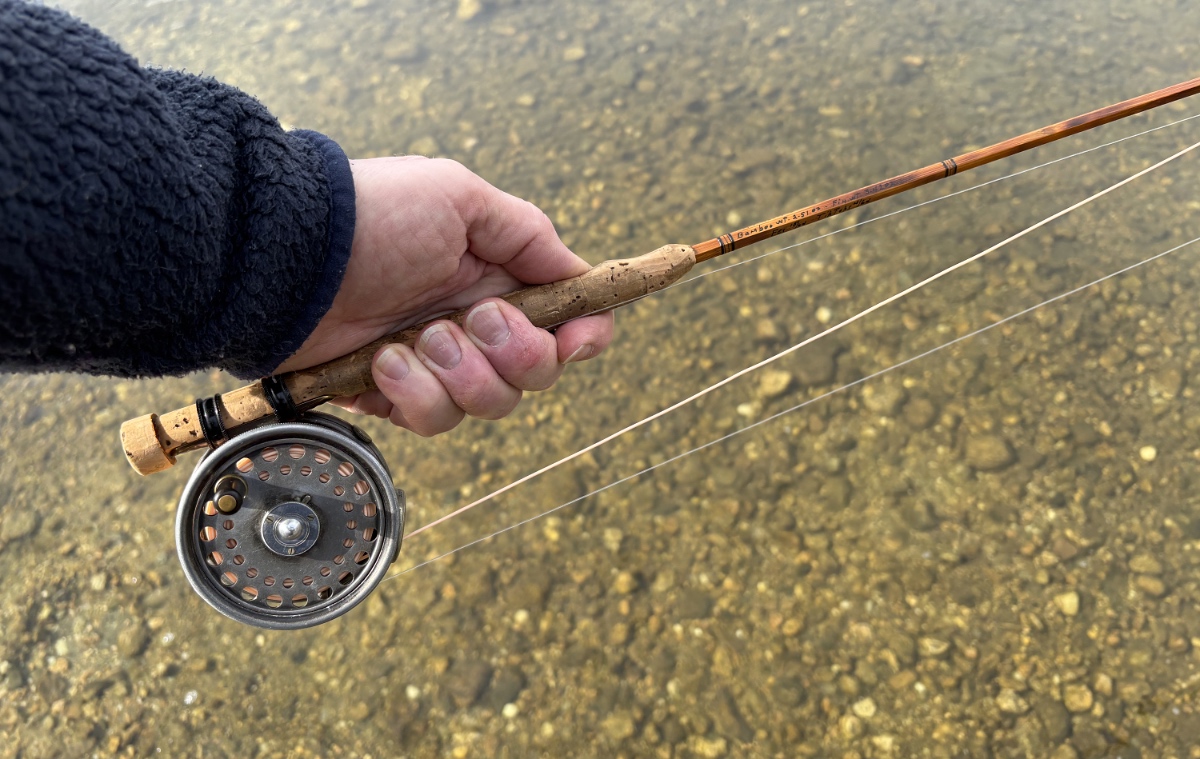
An attractive feature of the Parabolic 15 was that it could be supplied with two differently-tapered tips, one intended for nymph and streamer fishing (the “wet” or parabolic tip) and a lighter-weight tip optimized for dry fly fishing. Most customers asked for this option, but Para 15s were also built with two wet tips and with two dry fly tips. PHY called this latter option his “dream rod” configuration of the Para 15 taper.
In April 1951, Paul H. Young built for his own personal use the “Best rod in the world,” a special, exceedingly lightweight Parabolic 15 with dry fly tips. The weight of the bamboo used in making the rod was 2.51 ounces, and the finished weight of the completed rod was a mere 3.42 ounces, by far the lightest-weight Parabolic 15 known to have been made (by comparison, my own 7’6” “Martha Marie” trout rod weighs 3.40 ounces).
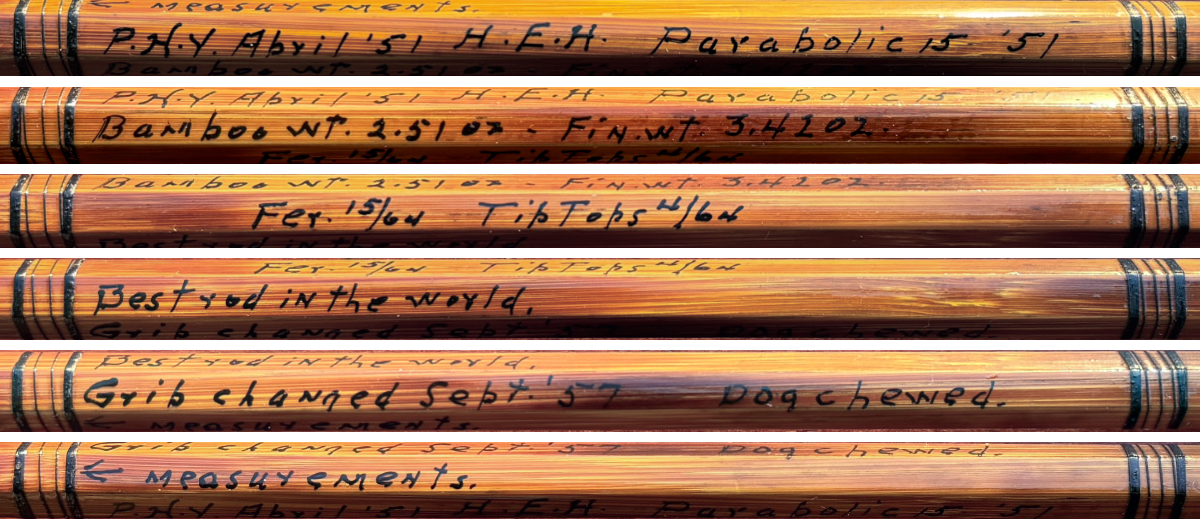
All six flats of the butt section are labeled as follows:
P.H.Y. April ’51 H.E.H. Parabolic 15 ’51
Bamboo wt. 2.51 oz. Fin wt. 3.42 oz.
Fer. 15/64 TipTops 4/64
Best rod in the world.
Grip changed Sept. ’57 – Dog chewed.
Measurements (on the shaft, PHY placed measurement markings of 10, 12, 14, and 16 inches for measuring the trout that he caught and released).
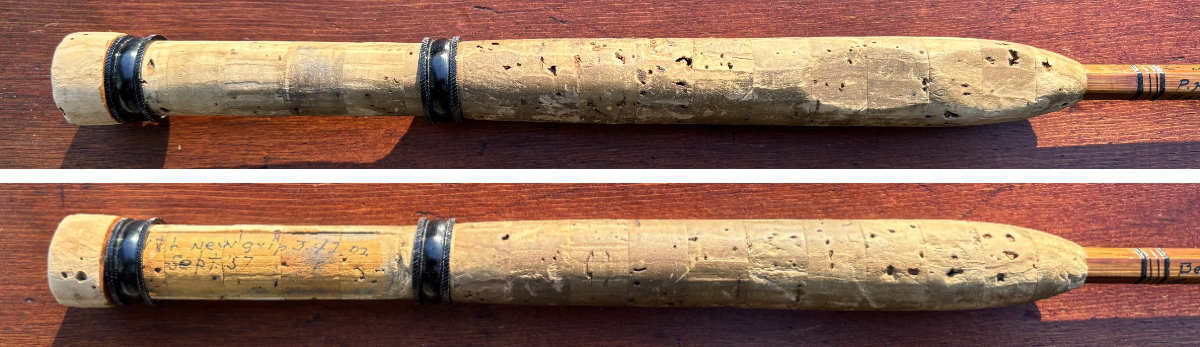
In addition, the cork reel seat is marked: With new grip 3.42 oz. Sept ’57. This notation relates to the line of text on the butt shaft Grip changed Sept. ’57 – Dog chewed., which for me is the best inscription ever inked on a bamboo rod. The Young household had multiple dogs, any of which could have gotten hold of the rod. In particular, there was a young German shepherd named Fritz which was left in the PHY shop overnight to deter break-ins. But Fritz proved so destructive that he caused more damage in the shop than any thief could have done. When left in the boat storage area, he destroyed seat cushions and chewed on mahogany transoms. In 1957, Fritz was given to another family.
The replacement grip is made from cork rings in the configuration called “mustard cork,” where the natural fissures in the cork run perpendicular to the rod shaft, as opposed to the more common “specie cork” arrangement where the fissures run parallel to the rod shaft. It’s possible that Young made this rough grip using spare material for a quick fix, and never got around to making a more finished replacement grip.
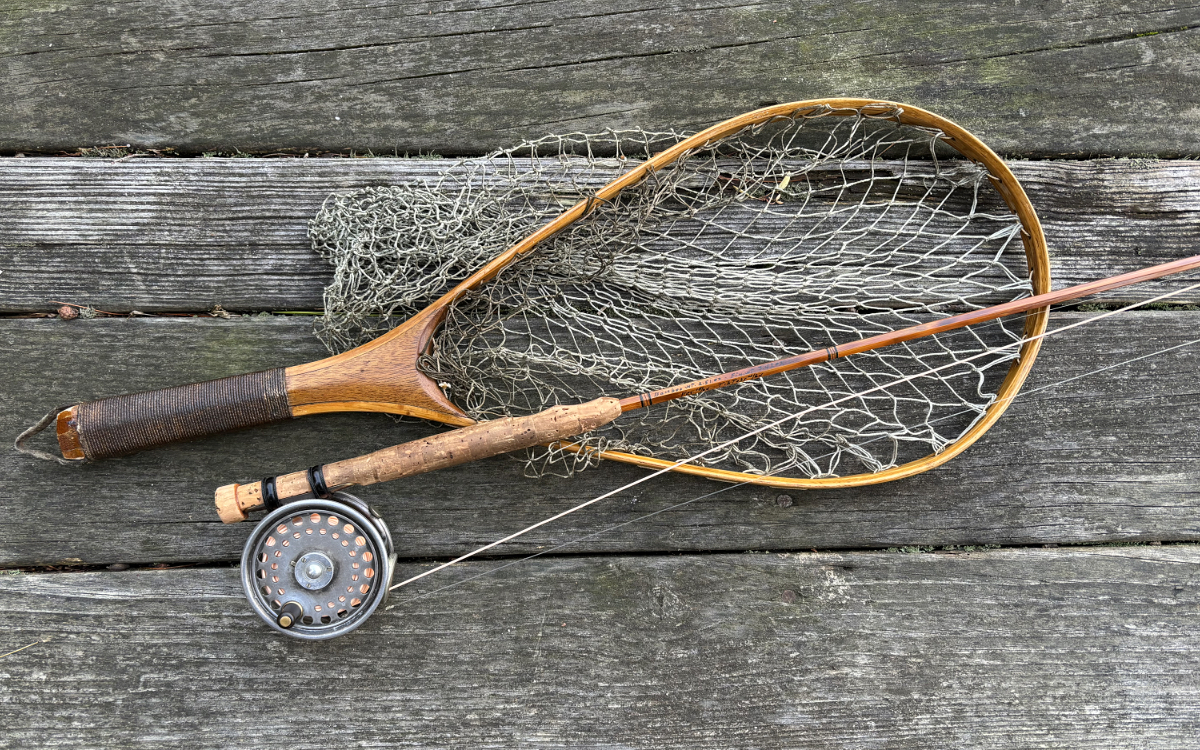
In these photos, Paul Young’s personal Parabolic 15 fly rod is shown with his personal Hardy St. George trout reel.