Paul H. Young’s smallest cataloged spinning rod
The “J.C. Salyer” spinning rod model was listed in the mid-1950s Paul H. Young catalog as “probably the lightest practical spinning rod made.” Paul Young named this rod model after John Clark Salyer II (1902-1966), who became known as “the father of the National Wildlife Refuge System” as, under Salyer’s leadership, the refuge system grew to encompass nearly 29 million acres by the early 1960s.
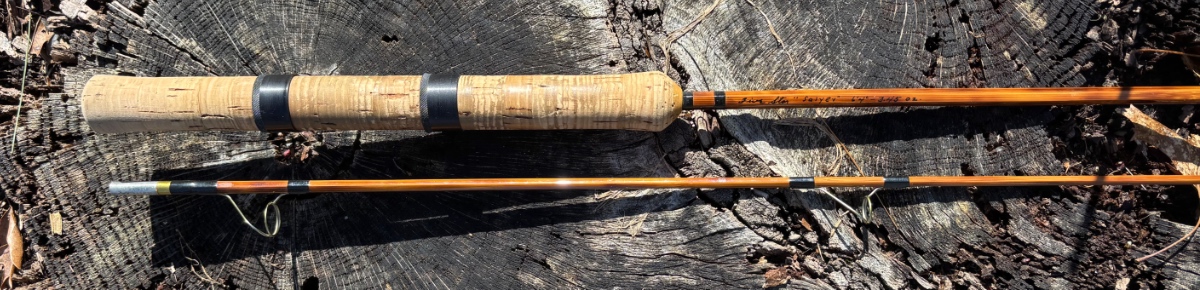
The example pictured here is a 6’4″ “Five Star” J.C. Salyer model spinning rod that bears serial number 3682. It weighs 3.45 oz. and was built with a single tip, as was typical of Young’s spinning rods (the fly rod model were usually supplied with two tips). It is made from dark mottled flamed cane constructed in a 2X2 node arrangement for both the butt and tip sections. Dual black rings (each marked with the PHY stamp) were placed over a 10-inch long straight cork grip, slightly flared at both ends. When I acquired the rod, it appeared nearly unused. I quickly learned that PHY had installed one of the rings backward so that it was almost impossible to fit a spinning reel onto the rod. Dana Gray (Carlson Rods) removed the last few corks of the grip so that the ring could be removed and correctly replaced, after which new corks were attached and expertly shaped by Dana to complete the repair.
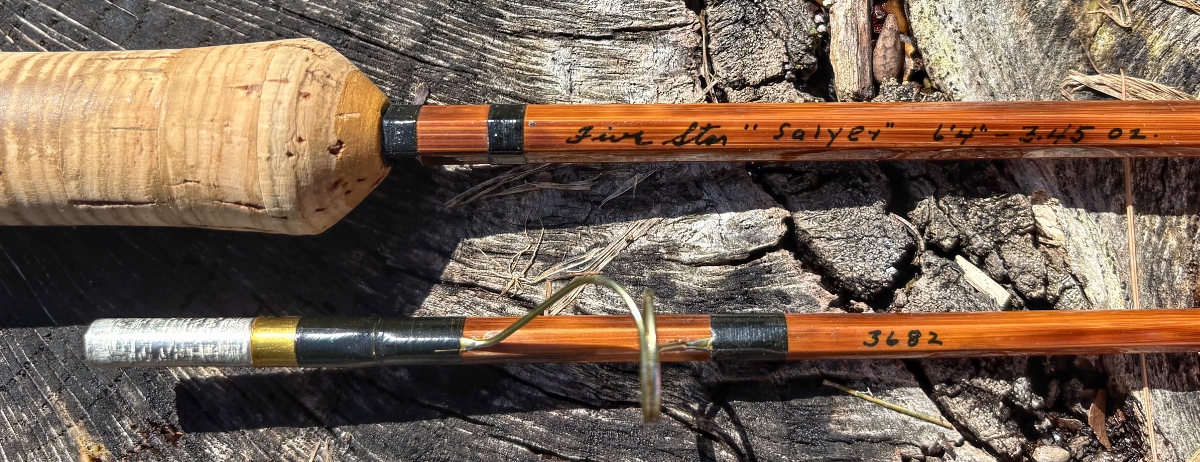
The butt section is inked in PHY’s handwriting on one flat: Five Star “Salyer” 6’4″ – 3.45 oz. (Five Star is written in cursive; the rest of the line is hand-printed lettering). The butt is also inked 3682 near line guide. The tip is inked 3682 forward of line guide nearest to the male ferrule. The rod is cased in its original copper-color satin bag & extra-wide Champion-style tube. Rod #3682 was one of a group of spinning and fly rods sent by PHY to Thurman Randle and Company, a sporting goods dealer in Dallas, Texas, for retail sale.
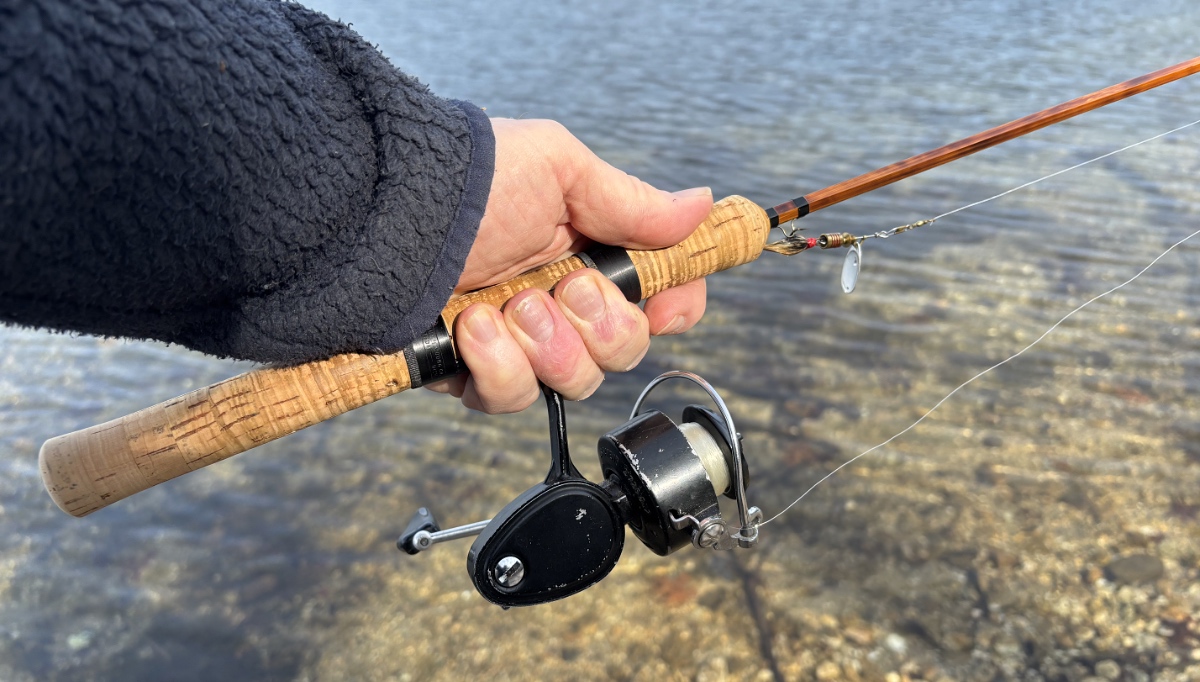
The PHY shop ledger records the finish date for rod #3682 as March 21, 1958. The photo above shows the rod in use on March 21, 2026 on the 68th anniversary of its completion by Paul H. Young.